Page Last Updated: October 16, 2025
Visual Evoked Potential Task🔗
The Visual Evoked Potential Task (VEP) (v.11.29.23) measures development of visual cortex and response to stimuli, reflecting underlying cortical development. VEP amplitude and latency decreases with age during the first three years of life. The VEP has been associated with concurrent and later developmental outcomes as a function of prenatal substance exposures (Margolis et al., 2024), early visual enrichment or deprivation (Jensen et al., 2019), vision system maturation (Lippé et al., 2009), neurodevelopmental disorders (e.g., ASD and ADHD; Cremone-Caira et al., 2023; Nazhvani et al., 2013), and reading and learning disabilities (Shandiz et al., 2017). The morphology of the VEP likely reflects varying degrees of synaptic efficiency and as such, can be used as a readout of general cortical function.
Task Details🔗
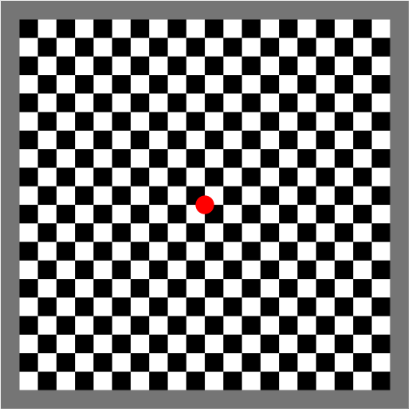
A flashing black and white 20x20 checkerboard with a red circle in the center is shown for the duration of the task (trial counts of 60 Checkerboard A and 60 Checkerboard B for a total of 120). The task elicits a VEP response in the occipital area (Oz), consisting of N1 (first negative peak), P1 (first positive peak), and N2 (second negative peak) components.
References🔗
Cremone-Caira, A., Braverman, Y., MacNaughton, G. A., Nikolaeva, J. I., & Faja, S. (2023). Reduced Visual Evoked Potential Amplitude in Autistic Children with Co-Occurring Features of Attention-Deficit/Hyperactivity Disorder. Journal of Autism and Developmental Disorders. https://doi.org/10.1007/s10803-023-06005-7
Fox, N. A., Pérez-Edgar, K., Morales, S., Brito, N. H., Campbell, A. M., Cavanagh, J. F., Gabard-Durnam, L. J., Hudac, C. M., Key, A. P., Larson-Prior, L. J., Pedapati, E. V., Norton, E. S., Reetzke, R., Roberts, T. P., Rutter, T. M., Scott, L. S., Shuffrey, L. C., Antúnez, M., Boylan, M. R., … Yoder, L. (2024). The development and structure of the Healthy Brain and Child Development (HBCD) study EEG Protocol. Developmental Cognitive Neuroscience, 69, 101447. https://doi.org/10.1016/j.dcn.2024.101447
Jensen, S. K. G., Kumar, S., Xie, W., Tofail, F., Haque, R., Petri, W. A., & Nelson, C. A. (2019). Neural correlates of early adversity among Bangladeshi infants. Scientific Reports, 9(1), 3507. https://doi.org/10.1038/s41598-019-39242-x
Lippé, S., Kovacevic, N., & McIntosh, A. R. (2009). Differential Maturation of Brain Signal Complexity in the Human Auditory and Visual System. Frontiers in Human Neuroscience, 3, 48. https://doi.org/10.3389/neuro.09.048.2009
Margolis, E. T., Davel, L., Bourke, N. J., Bosco, C., Zieff, M. R., Monachino, A. D., Mazubane, T., Williams, S. R., Miles, M., & Jacobs, C. A. (2024). Longitudinal effects of prenatal alcohol exposure on visual neurodevelopment over infancy. Developmental Psychology. https://psycnet.apa.org/record/2024-66755-001
Nazhvani, A. D., Boostani, R., Afrasiabi, S., & Sadatnezhad, K. (2013). Classification of ADHD and BMD patients using visual evoked potential. Clinical Neurology and Neurosurgery, 115(11), 2329–2335. https://doi.org/10.1016/j.clineuro.2013.08.009
Shandiz, J. H., Heyrani, M., Sobhani-Rad, D., Salehinejad, Z., Shojaei, S., Khoshsima, M. J., Azimi, A., Yekta, A. A., & Yazdi, S. H. H. (2017). Pattern Visual Evoked Potentials in Dyslexic Children. Journal of Ophthalmic & Vision Research, 12(4), 402–406. https://doi.org/10.4103/jovr.jovr_106_16